

Is Caviar Pasteurized? How Long It Lasts
Producers heat some caviar before it reaches you and leave the rest alone. That single step changes the flavor and texture of what you eat. It also changes how many weeks you have to eat it.
What pasteurizing does
Pasteurizing heats the caviar inside its sealed container. Producers hold it at around 140 degrees Fahrenheit for fifteen to twenty minutes, then cool it fast. The heat kills bacteria. It also sets the proteins in the egg wall, which firms up the pearl and takes the edges off the taste.
What the process buys is time. A sealed container of pasteurized caviar keeps for months, and some keeps for a year.
What fresh caviar is
Fresh caviar skips that step. Producers screen the roe, salt it lightly and pack it. Nothing else happens to it. The pearl stays soft enough to pop, and the flavor carries more: butter, a little of the sea, a finish that keeps going.
It also begins ageing on the day it leaves the farm.
How to tell which one you have
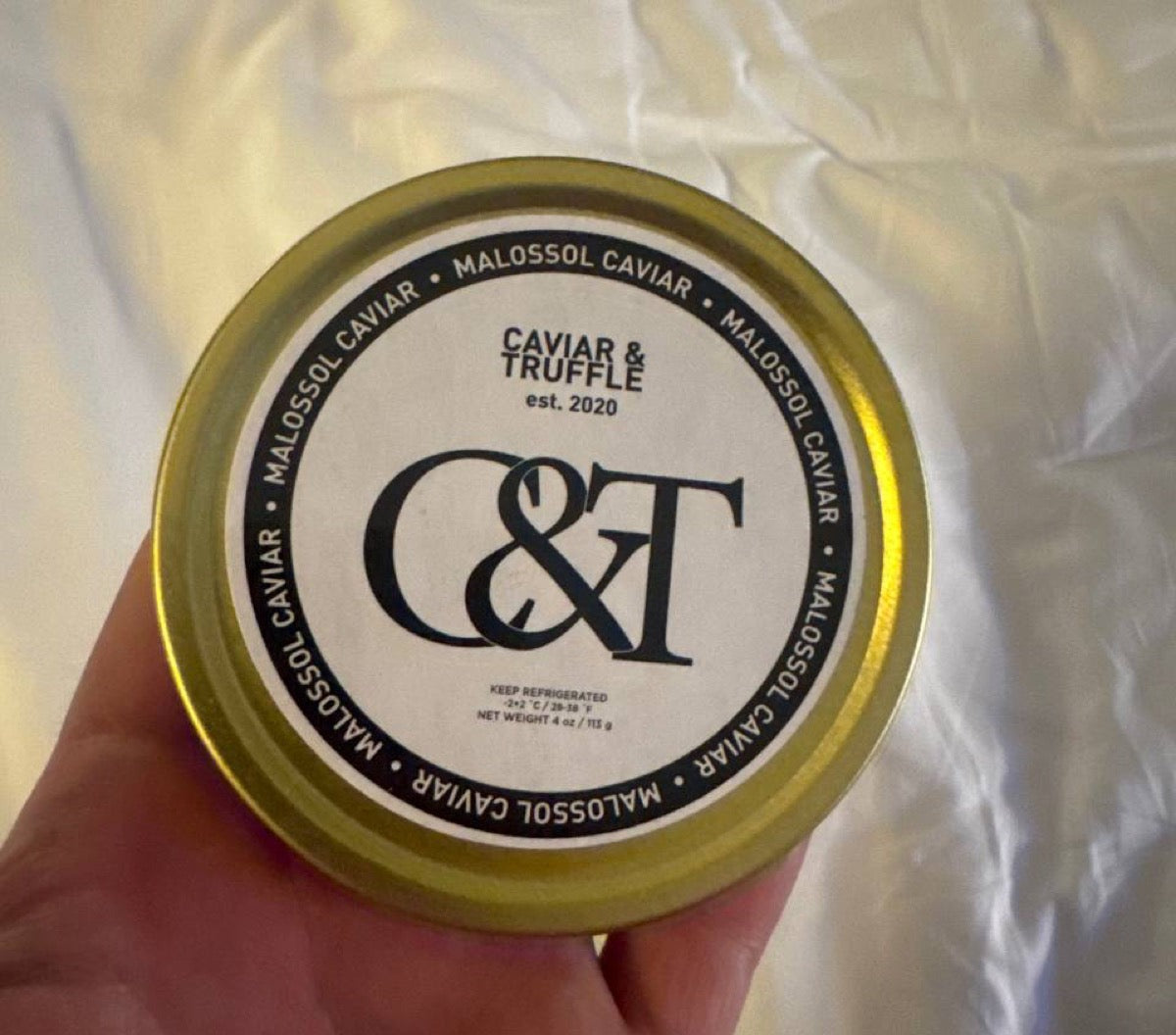
Some say a vacuum seal usually means pasteurized. Others use a vacuum seal on every tin of fresh caviar they pack. Packaging makes a poor signal.
Three checks work better:
Read the label. Some producers state pasteurized outright, though many do not.
Look at the caviar shelf life. Months or a year point to heat. Weeks point to fresh.
Check where the tin was sitting. Anything sold off a room temperature shelf went through pasteurizing. Fresh caviar stays refrigerated the whole way.
How long does caviar last
| Sealed | Once opened | |
|---|---|---|
| Fresh | three to six weeks, refrigerated | two to four days |
| Pasteurized | several months, sometimes a year | two to four days |
Opening the tin starts a short clock either way. Air reaches the roe regardless of which kind you bought.
At room temperature, caviar begins to spoil after about two hours. Above 90 degrees Fahrenheit, after about one.
Freezing ruins it. Ice crystals burst the pearls, and what thaws out is a salty paste.
The sealed numbers move around between sellers, and salt and preservatives explain most of the spread. Borax extends shelf life considerably, and the United States bans it in food. Producers who cure lightly and skip preservatives end up with the shortest stated life. So a short shelf life often signals a better product rather than a worse one.
How to store caviar
Good caviar storage comes down to two things: cold and air.
Keep the tin in the coldest part of your fridge. Our label gives a range of 28 to 38 degrees Fahrenheit, and you want the low end of it. A standard fridge setting lands near the top of that range, so the back of the bottom shelf is the right part of your fridge and the door is the worst. Ice packs under the tin help if you have them.
Leave the seal intact until you plan to eat it. An unopened tin holds its condition on its own.
Once you open it, press a piece of plastic wrap down onto the surface of the roe. That keeps air off it. Replace the lid and return the tin to the cold spot.
Take it out ten to twenty minutes before serving. Caviar straight from the fridge tastes of almost nothing, and those minutes let the flavor come back.
Serve it with mother of pearl, bone, horn or glass. Metal reacts with the roe and leaves a metallic aftertaste behind.
How to tell if it has gone off
Oil pooling on the surface, a sour taste, or a smell of fish. Good caviar smells of the sea rather than of fish. The difference is obvious once you have smelled both.
Which one to buy
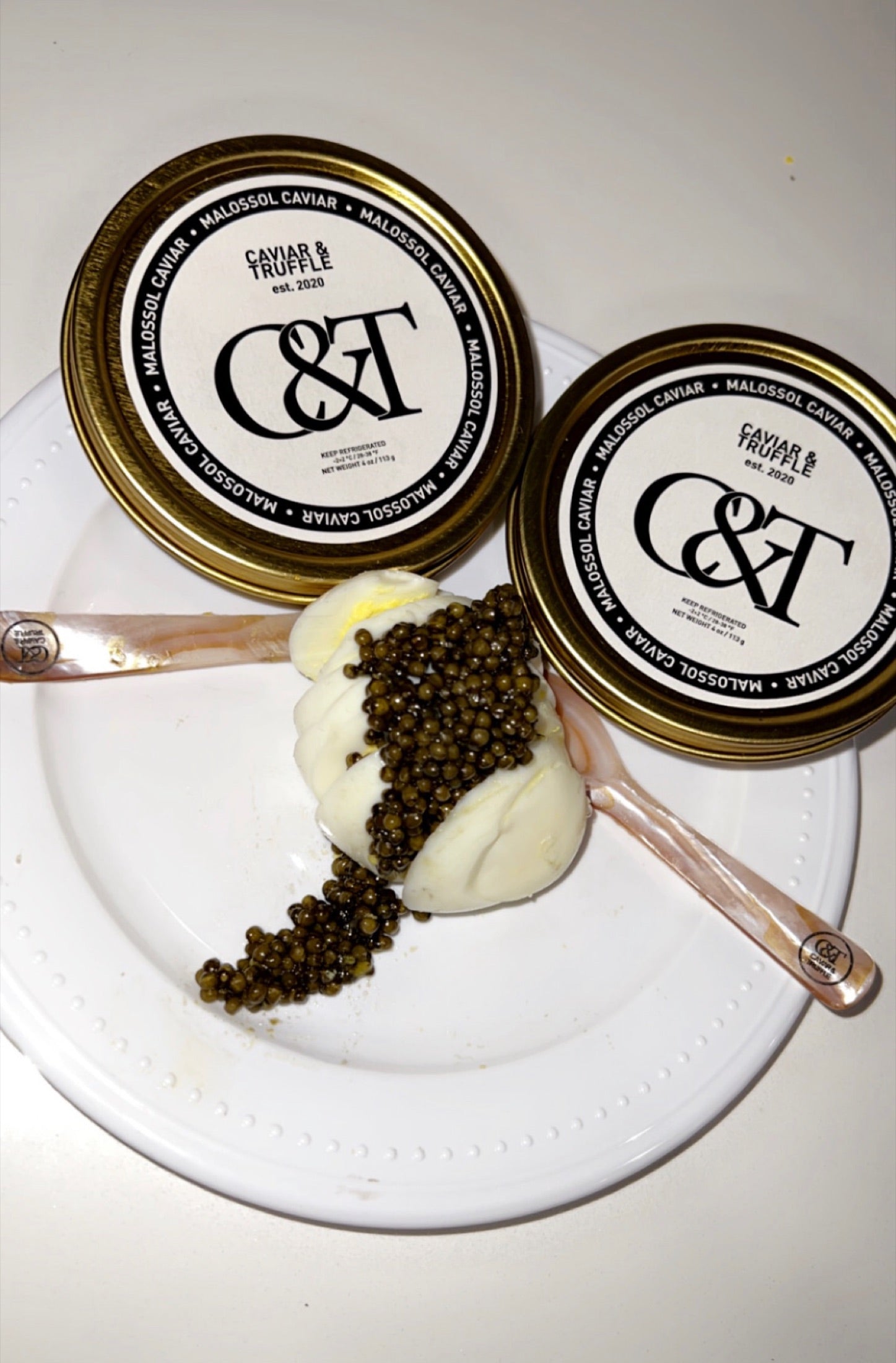
Choose pasteurized when the timing is uncertain. That covers stocking up, buying a gift weeks ahead, and sending a tin somewhere hot. In those cases the longer shelf life matters more than the difference in flavor and texture. Pressed caviar, sold under the Russian name payusnaya, keeps even longer and suits cooking rather than a spoon.
Choose fresh when you plan to eat it within a few weeks. That is when you get the softer pearl and the fuller taste you paid for.
Some people receive advice to avoid unpasteurized food, including during pregnancy. The named concerns are listeria and parasites. Put the question to your doctor rather than to a caviar shop.
What we sell
Our Premium Black Caviar is Kaluga Hybrid: malossol, fresh, unpasteurized, no preservatives.
It ships cold and free on every order, same day by courier in Los Angeles and Miami and overnight everywhere else in the United States. Mother of pearl spoons and an opening key come in every box. You have what you need to serve it properly the moment it arrives.